Mention vs. Citation in AI Answers: The Difference That Matters
Being named in an AI answer and being cited as a source are two different wins with different value. See the mention vs. citation gap and which to target.
When a generative engine answers a buyer’s question, two different things can happen to your business inside that one response. Your brand name can appear in the sentences the engine writes — part of the recommendation the reader reads. Or your page can appear among the sources linked beside it. From a distance these look alike, and most people lump them together as “showing up in AI.” They are not the same outcome, and they do not carry the same value.
The distinction quietly decides your strategy. Treat “being named” and “being cited” as one metric, and you optimize for the wrong thing, misread your competitive position, and draw confident conclusions from half the picture. This article defines both, explains why each carries separate value, shows what you misread when you track only one, and helps you choose which to prioritize.
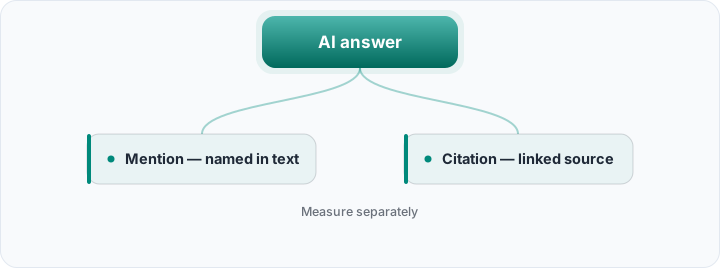
What a mention is, and what a citation is
A mention is when your brand name appears in the prose of the answer — the text the engine generates and the reader consumes. If someone asks an assistant which providers to consider in your city and the answer says “options worth looking at include [your brand],” you have been mentioned. Your name is part of the recommendation, in the reader’s view whether or not they click.
A citation is different: your page is attached to the answer as a linked source — the reference the engine points to as the basis for a claim. Citations appear as source links, footnotes, or the small source cards around an answer. It is the engine saying, in effect, “this is where this information comes from.” Being a link, it is also a door to your site.
Crucially, the two occur independently. You can be mentioned without being cited — named in the prose with no link back. You can be cited without being mentioned — your page among the sources while your name never appears in the reader’s sentences. You can earn both, or neither. Collapsing them into one number erases information you need. New to this? Our guide to what GEO is lays the groundwork.
Why the two carry different value
A mention is fundamentally an awareness and consideration event, inside the answer where the decision is forming. When the engine writes your name into its recommendation, the reader meets your brand at the moment they weigh options. That is valuable even with no click: many absorb the two or three names an answer offers and carry them into the next step — a search, a shortlist. Being in the prose means being in the consideration set.
A citation carries two other kinds of value. First, a referral path: a linked source is a route back to your site that, unlike a mention, can produce a measurable visit. Second, and often underrated, an authority signal — attaching your page to a claim means the engine judged it trustworthy enough to stand behind, a vote of confidence that compounds. A mention says the engine will speak your name; a citation, that it rests its answer on your page.
So the two wins map onto different goals: mentions move the top of the funnel inside the answer, while citations move traffic and build the authority that makes future selection likelier. Neither is better — they are different currencies, and a healthy position needs both.
What you misread if you track only one
Track mentions only, and you build a flattering but dangerous blind spot. Your name keeps appearing, the dashboard looks healthy, and you conclude you are winning. But a mention produces no clicks, so you may be celebrating visibility that sends no visitor. Worse, you cannot tell whether you are the answer’s trusted source or merely a name in a list while a competitor’s page is the cited evidence.
Track citations only, and you invert the problem. You may earn source links and their clicks, yet your brand name may never appear in the prose most readers actually read. Many consume the answer and never click; to them you do not exist, because your contribution was a footnote, not a named recommendation. You can be the engine’s favorite source and still lose the consideration battle in the sentences above.
Each metric alone tells a story that feels complete and is not. Your real AI visibility lives in the relationship between the two — and you cannot see a relationship while measuring only one side.
Which to prioritize given your goal
Because the two outcomes serve different goals, the right priority depends on what you are trying to win.
- If your goal is awareness — more buyers meeting your brand while they decide — prioritize the mention. Aim to be named in the answers to the category and comparison questions your buyers ask, so your brand enters the consideration set even when no one clicks.
- If your goal is traffic — measurable visits from AI answers to a page, an offer, a booking flow — prioritize the citation. It is the only one that opens a door to your site, so pursue being the linked source where a click carries value.
- If your goal is authority — being treated as the reference in your category — prioritize the citation too, but for its signal, not its clicks. Being chosen as the source is the engine’s statement that your page can be trusted, and that standing reinforces itself.
Most businesses want some of all three, so this is weighting, not a permanent choice. Make the weighting a decision, not an accident — and you cannot prioritize what you are not measuring separately.
Mention and citation in competitor analysis
The separation is most revealing when you turn it on competitors. A competitor may be named as the recommendation while your page is only the cited source beneath it — or the reverse, where you are named while a competitor’s page is the trusted source. A real-estate office might be named as the agency to call while a rival’s report is cited; a dental clinic might be cited on a procedure while a rival wins the booking. Either way one of you takes the awareness and the other the referral path — invisible if you collapse both into a single “are we in the answer” checkbox.
Reading the two dimensions side by side turns raw visibility into strategy. It tells you whether you are losing the naming battle, the sourcing battle, or both, and against whom — pointing to different fixes. Our companion piece on whether AI is recommending your competitor explores this lens; the point to carry is that “who is mentioned” and “who is cited” are separate questions, and a rival can beat you on one while you lead on the other.
Measuring the two separately: how to start
Telling the two apart is a measurement decision, and it is the one Rocketly is built around. Rather than a single “visibility” number, Rocketly measures them separately: share of voice for how often your brand is named relative to the competitors you track, and citation rate for how often your pages are the linked source. Separate axes tell an awareness problem from an authority problem, so you choose the right response instead of guessing.
What you set up today is practical and bounded. You define the buyer questions to track, per language and market within your quota; you manage your brand and competitor list so mentions are attributed correctly; and you work through a readiness checklist. Today the surface measured weekly as standard is Google AI Overviews. ChatGPT and Perplexity measurement is in a controlled rollout and not yet available to every account, while trend history and drop alerts are available — so treat the picture as a clear week-by-week view of the engines measured, not a promise about every engine.
If you are ready to act, our guide on how to start measuring AI visibility today covers the first setup, and the piece on which brand AI cites and the trust signals behind it goes deeper on citations. The habit is simple: never read your presence in an AI answer as a single yes or no. Ask both — were we named, were we cited — because the answer is often yes to one and no to the other, and that gap is your next move.
Frequently asked questions
Is a mention or a citation more valuable?
Neither is universally better; they serve different goals. A mention puts your name inside the answer where consideration happens — valuable for awareness even without a click. A citation gives a referral path plus an authority signal, because the engine chose your page as evidence. Match it to your objective: awareness leans toward mentions, traffic and authority toward citations.
Can I be cited without being mentioned, or mentioned without being cited?
Yes, and both happen often. You can sit among an answer’s sources while your brand name never appears in the prose the reader sees, or be named in the recommendation with no link back to your site. This is why measuring the two separately matters — a single “are we in the answer” view hides which is actually true for you.
Does Rocketly measure mentions and citations separately today?
Yes. Rocketly reports share of voice for how often your brand is named and citation rate for how often your pages are cited, on separate axes. Google AI Overviews is measured weekly as standard, and you manage tracked questions, your brand, and your competitor list. ChatGPT and Perplexity measurement is in a controlled rollout and not yet available to every account; trend history and drop alerts are available.