What is quote management? A process that leaves nothing to chance
What quote management is, how the quote lifecycle works, and why templates, approvals and tracking matter. Pros, common mistakes and an example.
The quote is the moment of truth in most sales: everything discussed until then takes concrete form in a document, and the customer gets as close as possible to saying "yes" or "no." And yet quotes get lost surprisingly often — days pass while one is prepared by hand, different reps write different terms, and once it's sent, no one knows whether it was even viewed. Quote management takes this critical moment out of the realm of luck and turns it into a consistent, trackable process.
This article explains what quote management is, the quote lifecycle, and why templates and approval workflows matter. For related topics, our sales funnel and sales automation guides are complementary; for the whole picture, see what is a CRM.
What is quote management?
Quote management is running a quote's entire lifecycle — from preparation to sending, from tracking to outcome — in an organized and visible way. It's not about creating one-off documents; it's about combining consistent templates, correct pricing rules, approval steps and post-send tracking into a single flow.
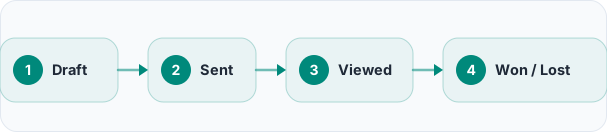
The quote lifecycle
In a healthy process, every quote moves through clear stages:
- Draft: the quote is prepared; products, terms and discounts are set.
- Approval (if needed): special terms or discounts pass through internal approval.
- Sent: the quote is delivered to the customer; the send time is recorded.
- Viewed: you know the moment the customer opened the quote — the golden window for follow-up.
- Won / lost: the quote is resolved; a won opportunity moves to the next pipeline step.
What a good quote process looks like
- Consistent templates: every quote comes out with the same professional look and language; brand consistency is preserved.
- Correct pricing: products and terms are pulled from a central source; the risk of manual error drops.
- Versioning: when a quote is revised, past versions aren't lost, and it's visible who changed what.
- Traceability: when a quote was sent, viewed and resolved is all on record.
Quote tracking: viewed or not, and when?
Sending a quote is half the story; what matters is what happens afterward. Knowing whether the customer opened the quote is the strongest signal for follow-up. If a quote has been viewed but there's no reply, that's the right moment for a timely, gentle follow-up. If it hasn't been viewed, perhaps it landed in spam or went to the wrong person — knowing that makes intervention possible.
Approval workflows: discounts and special terms
Not every quote should go out with the same authority. Quotes above a certain discount, or with special payment terms, should pass a manager's approval before sending. An approval workflow both protects the margin and gives the team a clear frame: a rep knows what they can offer on their own and what needs approval. This delivers both speed and control.
Pros and what to watch for
Pros
- Speed: quotes are prepared in minutes with consistent templates.
- Professionalism: every quote comes out with the same quality and brand voice.
- Visibility: which quote is where, viewed or not, resolved or not — all on one screen.
What to watch for
- Over-standardization: templates are good, but every customer is unique; leave room for personalization.
- Sending without follow-up: send-and-forget is the most common loss — attach a follow-up step to every quote.
After the quote: follow-up and closing
Silence after a quote is sent is normal, but it must be managed. A good process sets an automatic reminder for quotes that were viewed but not answered; the rep steps in gently at the right moment. The goal isn't persistence but staying top of mind and easing the decision. A closed quote moves to the funnel's "won" step; a lost one is recorded with its reason — future quotes learn from it.
Digital quotes and e-signature
The era of paper and PDF attachments is fading. Digital quotes let the customer open and review the quote in a browser — and even accept it with a single click. E-signature support cuts the moment of acceptance from days to minutes: the customer doesn't wrestle with a printer, scanner or back-and-forth email just to say "yes." Reducing that friction directly affects the close rate.
Learning from quotes: win rate
Every quote is a data point. Over time, quote management lets you answer questions like: what share of quotes end in acceptance (win rate)? Which kinds of quotes win more? What reason most often loses a quote — price, timing, scope? These patterns make your future quotes sharper and more persuasive.
Common mistakes
- Preparing quotes by hand, from scratch — slow and inconsistent.
- Setting no follow-up after sending; letting a viewed quote go cold.
- Not recording why quotes are lost; repeating the same mistake.
A short example
A rep builds and sends a quote in minutes using a ready template. The system notifies them that the customer opened it two days later. That same day the rep sends a gentle nudge: "Any questions, can I help?" This timely touch makes the difference, and the quote ends in acceptance. Without visibility, this quote would most likely have quietly disappeared.
Frequently asked questions
Are quote management and a quote template the same thing?
No. A template is only one part of the process — it standardizes how a quote looks. Quote management is the whole lifecycle, covering preparation, approval, sending, tracking and resolution.
How do I know whether a quote was viewed?
Through quote tracking. When the customer opens the quote, the system records it and notifies you; that's the best signal for a timely, effective follow-up.
Why are approval workflows needed for quotes?
So that certain discounts or special terms are checked before sending. An approval workflow protects the margin and gives the team clear boundaries: what's free to offer and what needs approval is defined.
What should I do after sending a quote?
Plan a timely, gentle follow-up. Especially if the quote was viewed but unanswered, a well-timed reminder speeds the decision. The system can set this reminder for you.
How does quote management connect to the sales funnel?
The quote stage is one of the most critical steps of the sales funnel. Quote management makes this step visible; an accepted quote moves the opportunity to "won," so the funnel reflects reality.
Good quote management makes the most decisive moment of a sale consistent, fast and trackable. Rocketly lets you prepare quotes in minutes with templates, set up approval workflows, see whether a quote was viewed, and automate post-send follow-up.