How to find leads: 12 proven methods
How do you find leads? 12 proven methods across inbound, outbound, paid and referral, which one fits your business, and how not to lose the leads you find.
Every business shares the same lifeblood: new prospects — leads. However happy your existing customers are, a sales pipeline with no steady stream of new prospects eventually dries up. The good news is there's no single magic channel for finding leads; there are many proven, complementary methods. Choosing the right one depends on your type of business and your resources.
This guide covers 12 proven methods for finding leads — inbound, outbound, paid and referral-based — grouped together, then explains which fits you and how not to lose the leads you find.
What is a lead, and why find them systematically?
A lead is a person or company that might be interested in your product or service but isn't a customer yet. You can't grow on prospects that arrive one by one, by chance; growth comes when you turn lead generation into a repeatable system. A systematic approach lets you see how many leads each channel brings and at what quality, so you can steer your budget to where it works best.
Inbound methods
Inbound gets customers to find you; it starts slower but is the most sustainable channel over time:
- 1. SEO and blog content: Create content answering the questions your customers search on Google; they find you at the exact moment of need. (This article is itself an example of that.)
- 2. Lead magnet: Offer something valuable — an e-book, checklist, template or calculator — in exchange for an email.
- 3. Sharing value on social media: Regular, useful posts build an audience, and that audience turns into leads over time.
- 4. Webinars and events: Run a free session on a topic; attendees are already interested, qualified prospects.
Outbound methods
With outbound, you reach the prospect; it delivers fast but demands targeting and personalization:
- 5. Cold email: A short, personalized, value-focused email to the right person is still one of the most effective B2B channels.
- 6. Cold calling: A phone call with a good script works, especially for high-value sales.
- 7. LinkedIn connection and outreach: Connect with decision-makers in your target sector and start a valuable dialogue.
- 8. Targeted company list (prospecting): Identify companies that fit your ideal customer profile and build a systematic list.
Paid methods
Paid channels offer speed and scale in exchange for budget:
- 9. Search and social ads: Capture prospects with ads targeted at intent on Google and at interests on social media. Click-to-WhatsApp ads are especially strong since they start the conversation directly — paired with the WhatsApp Business API, conversion rises.
- 10. Retargeting: Reaching people who visited your site and left wins back warm but lost interest.
Referral and partnership methods
The lowest-cost, highest-trust leads usually come from here:
- 11. Customer referrals: Ask satisfied customers for referrals; referred prospects close faster and at a higher rate.
- 12. Partnerships: Set up mutual referrals or joint campaigns with businesses selling a different product to the same audience.
Which method fits you?
Trying to do all of them at once means doing none of them well. To choose, look at your type of business: if you make a few high-value B2B sales, outbound and LinkedIn stand out; for many small sales, inbound and ads scale; if you're a local service, referrals and social media give the fastest return. The best strategy is usually running one inbound, one outbound and one referral channel together.
Don't lose the leads you find: follow-up is a must
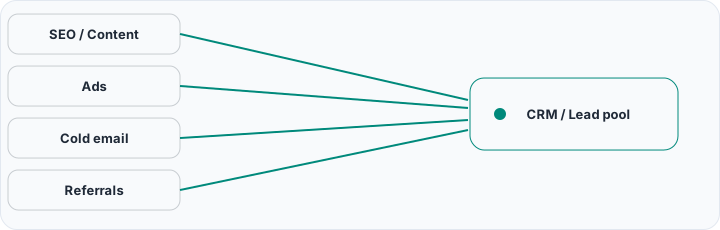
Finding leads is half the job; the real loss happens when a found lead goes un-followed-up. Every incoming prospect should collect in one place, be assigned to the right rep, and be followed up on time. Our guides on lead tracking, lead assignment rules and lead scoring help you build the process end to end.
Common mistakes when finding leads
- Chasing quantity, not quality: A thousand off-profile prospects are worth less than a hundred qualified ones.
- Depending on one channel: When the single source dries up, your sales stop; diversify.
- Not following up: A prospect answered in the first 5 minutes converts far more often than one answered hours later.
- Not measuring: Splitting budget without knowing which channel pays off is shooting in the dark.
Measuring lead sources
You can only know which method works through data. Record where each lead came from and track: leads per source, conversion rate, and cost per customer won. Often the channel that "brings the most leads" isn't the one that "wins the most customers"; that distinction drives the right decision.
Define your ideal customer profile first
The most often-skipped first step in finding leads is being clear about who you're looking for. "Everyone" isn't your customer; who are your best customers, in which sector, at what size, and which problem do they have? When you define this ideal customer profile (ICP), every method sharpens: you target the right keywords, email the right companies, spend ad budget on the right audience, and find more qualified prospects with less effort. Finding leads without a profile is shooting without a target.
B2B or B2C? It changes your method choice
Whether you sell to businesses or to end consumers determines which channel works. In B2B, reaching the decision-maker matters; LinkedIn, cold email, targeted prospecting and content marketing stand out. In B2C, scale and emotion matter; social media ads, collaborations and search visibility deliver faster. Instead of blindly copying methods, choose the ones that fit your type of sale.
How do you raise lead quality?
Many low-quality prospects tire your team and lower conversion. Ways to raise quality: add a few qualifying questions to your forms (budget, need, timing); sharpen the message in ads to filter out the wrong audience upfront; position the lead magnet so genuinely relevant people download it. The goal is to bring not more but more right people to the top of the funnel.
Automate lead generation
Once the methods are set up, automating the repeating steps is the key to scaling. A prospect from a web form can be recorded and assigned automatically; social and ad sources can flow into one pool; a first greeting message can go out automatically. That way your team works on converting prospects, not collecting them.
Finding and managing leads with Rocketly
Rocketly collects all your leads in a single pool, no matter the channel: web forms, WhatsApp, ads and referrals all merge in one place. Each prospect is automatically assigned to the right rep, recorded with its source, and you see clearly in CRM reports which channel actually pays off. So you don't just find leads — you turn the ones you find into customers.
Which method brings leads fastest?
Paid ads and targeted outbound (cold email/calls) usually deliver fastest. SEO and content start slower but become the lowest-cost, most sustainable channel over time. The healthiest approach uses fast and slow channels together.
If my budget is tight, where should I start?
On a low budget the best start is referrals, sharing value on social media and targeted cold email. These cost time and effort instead of money; they bring the first customers, and you can move to paid channels as you grow.
Do cold email or calls still work?
Yes, but only with the right targeting and personalization. A short, tailored, value-offering message to a fit person is still strong, especially in B2B; mass, generic blasts don't work.
How many lead channels should I use?
Two or three is ideal at first: doing those well is far more productive than doing five badly. Start with one inbound, one outbound and one referral channel, then expand based on results.
How should I follow up on the leads I find?
Collect all leads in one CRM, record them with their source, assign to the right person, and follow up fast. An un-followed-up prospect, however qualified, goes cold and is lost quickly.