Jewelry store CRM: custom orders, repairs, loyal buyers
How to keep custom orders, repairs, and special dates on one customer record, so a high-ticket jewelry store can remember every buyer by name.
A couple bought an engagement ring from you eighteen months ago. Today they walk back in to choose wedding bands, and you remember none of it: not their names, not her ring size, not the solitaire she kept returning to the case to look at. In a jewelry store this scene plays out constantly, because the work is high-ticket, infrequent, and deeply emotional. A good jewelry crm exists to close exactly that gap, gathering every customer, every custom order, and every repair ticket into one shared memory.
This article covers why a jewelry business is different from ordinary retail, how to keep custom orders and repairs in one system, how to turn special occasions into revenue without being pushy, and — honestly — what a CRM will not fix.
Why a jewelry business isn't ordinary retail
A coffee shop might see the same customer forty times a week. A jeweler sees a good buyer once or twice a year, sometimes once every three years. Yet that single visit can match a small café's entire monthly revenue. Every conversation carries a high ticket and a thin margin for error.
And a good experience here rarely stops at one sale. A groom who leaves happy with his engagement ring brings his mother-in-law, his sister, and his closest friend in time. In jewelry, trust travels by word of mouth, so handling a single relationship well often opens the door to five more.
Then there is trust. People hand you a ring inherited from a grandparent for repair, pay months in advance for a design they can only imagine, and take your word that a certificate is genuine. This trade sells a relationship before it sells a product. Leaving that relationship to memory is far too expensive a habit.
So the most valuable inventory a jeweler holds is not the gold in the case; it is what the shop knows about its customers. Every section below is about capturing that knowledge and putting it to work.
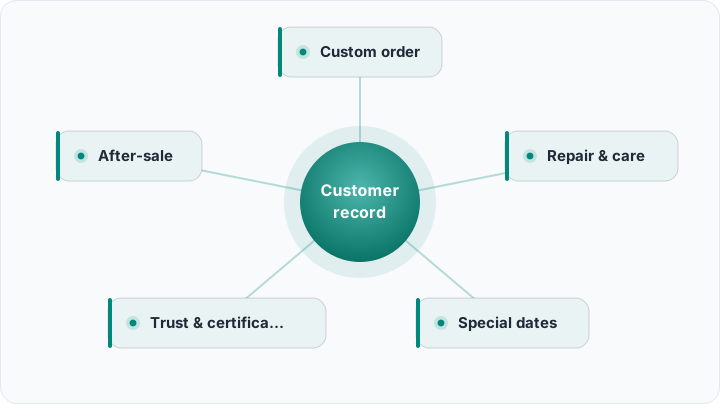
Remembering the customer is the real asset
Ring size, whether they favor yellow, white, or rose gold, any metal allergy, their budget range, a spouse's birthday, what they bought last time and who it was for — each of these is a quiet key to the next sale. Recalled at the right moment, selling feels less like pressure and more like care.
The trouble is that in most shops this knowledge lives in a senior jeweler's head or a notebook under the counter. When an experienced salesperson leaves, the relationship walks out the door with them. Kept in a customer record instead — much like a veterinary clinic keeps years of patient history — it becomes the shared memory of the business.
What belongs on a customer record
- Sizes and preferences: Ring size, preferred metal and stone, allergies, and fit notes mean nobody ever has to guess a measurement again.
- Important dates: Anniversaries, birthdays of a spouse and children, and engagement dates put the real reasons to buy on the calendar.
- Past purchases: Knowing which piece was bought, when, and for whom makes the next recommendation accurate and the conversation personal.
Custom orders: a long and fragile conversation
A bespoke piece is not a single yes; it is a conversation that stretches over weeks. The inquiry comes in, a sketch and quote are prepared, a deposit is agreed, production begins, a fitting is scheduled, and finally the piece is delivered. At every step the customer is excited and anxious in equal measure, and the unspoken question — how is it coming along? — hangs in the air.
Keeping that process on a visible pipeline reassures the customer and makes you look like the professional you are. Seeing which order sits at which stage, whether the deposit was taken, and how close the promised date is — all on one screen — eliminates forgotten orders, quiet delays, and awkward phone calls.
A concrete example: a groom wants his grandmother's stone set into a new ring. He messages twice a week to ask how it's coming, because what he handed over is a memory. A photo of the wax model at the right moment and a firm delivery date turn that anxiety into delight. The deposit, meanwhile, is not just money; it is a promise made by both sides.

Repairs and care: the forgotten revenue line
Resizing, soldering, tightening a loose stone, restringing pearls, a watch battery, a silver polish — repairs and care are the steady income most jewelers underrate, and they quietly build loyalty. Handled badly, they turn into a small nightmare: whose envelope is this, which ring is ready, who hasn't collected theirs in three weeks?
Opening a digital record for every repair — much like the tracking ticket a dry cleaner relies on — clears that confusion. An automatic "your piece is ready" message when the work is done both empties your shelves and makes the customer feel looked after.
In a jewelry store the most expensive thing is not the stone in the case; it is the customer you forgot.
Special occasions: a calendar that sells itself
Jewelry is almost always bought for a reason: an anniversary, a birthday, an engagement, Valentine's Day, Mother's Day, the New Year. If a customer bought earrings for their spouse last February, a gentle nudge in late January reads not as a sales pitch but as a favor.
Building that calendar the way a florist tracks every occasion lets you catch the moment instead of waiting for the season to arrive. You'll see the same retention logic in how a café or bakery keeps its regulars coming back; the difference in a jewelry store is that every reminder touches a far higher ticket.
The point is timing, not pressure. A personal, genuinely useful reminder a few times a year is welcome; a campaign blast every week just cools the room.
Men in particular tend to forget important dates and are grateful for a discreet, well-timed nudge. Earn one "you saved me" and your shop becomes the first place that comes to mind whenever a gift is needed. That kind of loyalty is won by timing, not by discounts.
Remember every customer by name
Rocketly gathers custom orders, repairs, and special dates on one screen, making your jewelry store more personal and better organized.
Try Rocketly freeHigh ticket and trust: the sale really starts afterward
A jewelry sale doesn't end when the box leaves the counter. Certificates, warranties, insurance appraisals, free cleaning and care, a future trade-up or upgrade — all of it is a chance to turn a one-time buyer into a customer for life.
Keeping that after-sale relationship going is really the storefront version of what e-commerce brands do when they turn the post-purchase relationship into revenue. When the customer stops by six months later for a free clean and you recognize them, you aren't chasing a new sale; you're continuing an established trust.
One inbox: the sale now happens on WhatsApp and Instagram
A piece of jewelry is usually seen on a screen first. A customer likes a ring on Instagram, messages "is this still available, how much?" on WhatsApp, then asks for photos from three angles. When those conversations run across three separate phones and three separate people, messages get lost and a warm buyer goes cold.
Bringing every channel into one inbox means you never lose track of which customer asked about which piece or where the conversation left off. On a high-ticket item, a fast, consistent, personal reply is very often the sale itself.
A common mix-up: the person messaging on Instagram and the one texting on WhatsApp are the same customer, yet they're greeted as two strangers. Merging channels under one contact removes that repetition and gives the customer the feeling of being known.
What a CRM won't fix
To be honest, no software will sell an ugly design, and none will replace craftsmanship or a warm salesperson. For a one-person workshop with twenty loyal customers the owner knows by name, a well-kept notebook is often enough; not every business needs a CRM.
A system earns its keep once you have hundreds of customers, more than one employee, and a steady flow of custom orders and repairs. And remember: data you don't enter isn't remembered. A CRM only works when the team feeds it with discipline — an empty customer record is no better than an empty notebook.
Frequently asked questions
Does a small jewelry store really need a CRM?
Not necessarily. If you have few customers and genuinely know them all, a good notebook does the job. Once custom orders, repairs, and more than one employee enter the picture, you'll need a shared memory.
Can I keep custom orders and repairs in the same system?
Yes, and you should. Seeing both an in-progress custom order and a dropped-off repair under the same customer record is exactly what keeps work from slipping through the cracks.
Isn't storing customer details risky?
Ring sizes, preferences, and dates are commercially valuable but sensitive. Limiting access within the team and recording only what you'll actually use protects both trust and order.
Won't occasion reminders annoy customers?
Not if the frequency and tone are right. A personal, genuinely helpful reminder a few times a year reads as a gesture; a weekly promotional blast reads as spam. Frequency draws the line.
Jewelry is, in the end, a business of trust and memory rather than metal. A store that remembers its customers by name, by size, and by occasion is always a step ahead of the shop next door. A tool like Rocketly makes that memory easier to keep in one place — but the real difference is made by the jeweler who feeds it every day and genuinely values the person on the other side of the counter.