Dry cleaner CRM: order tickets, pickup, loyalty
A practical way to move from paper tickets to digital ones, and keep pickup reminders, loyalty and every customer message on one record in a high-repeat shop.
Picture the counter at a dry cleaner: numbered hangers, shirts in plastic, a little paper ticket pinned to each one. The first customer of the day walks in and says, "I lost my ticket, but I dropped off two suits last Thursday." The phone rings at the same moment -- someone wants to know if their coat is ready. And on the back rack, three finished orders sit unclaimed. Dry cleaning is a high-repeat business that runs entirely on tickets and pickups. When we talk about a dry cleaner CRM, we mean putting a clean record-keeping system under that daily rush, not some heavy enterprise software.
This article walks through moving from the paper ticket to a digital one, sending pickup reminders, turning a weekly visitor into a loyal customer, and gathering every "is it ready?" message in one place. And to be honest, we'll also say when a small shop needs none of this.
Why the paper ticket lets you down
A paper ticket works beautifully when business is light. The carbon copy goes to the customer, the stub stays at the counter, the number on the hanger matches. Trouble starts as volume climbs. The ticket tears, gets lost, or rides through the wash in a coat pocket. The customer forgets the number, and you're left relying on "Mr. Kaya's navy overcoat" from memory.
There's a sneakier problem too: a paper ticket only knows about that one drop-off. It won't tell you how many times this customer came in last month, whether a garment has special notes, or whether they paid for cleaning or for pressing. Paper solves the handover, but it doesn't solve the relationship.
That's where a CRM comes in. The goal is to tie every ticket to a customer record: who dropped off what, when it's ready, whether it's paid, and when they last came in. Once that's in place, everything else -- reminders, loyalty, complaint tracking -- sits on top of the same record.
The digital order ticket is the heart of the system
It all starts with one record: the order. A digital ticket does what paper does, then adds the customer, the status, and the payment. At the counter you count the shirts, enter them one by one, and drop in a note: "ink stain on the collar," "missing button," "wants starch."
The life of an order is a straight line, and making it visible is a relief.

The beauty of this flow is that each step is a status. The moment "Ready" is marked, the system already holds everything needed to notify the customer. No one flips through a logbook or shouts to the back, "is that one done yet?"
Pickup reminders and the pile of uncollected orders
Every dry cleaner has its "graveyard shelf": orders finished long ago that nobody has collected. The customer forgets, loses the ticket, says "I'll grab it later" and never does. Those bags take up space, tie up money, and occasionally sour a relationship.
The fix isn't complicated: an automatic message the moment an order is "ready." A quick "Hi, your two suits are ready -- we're open until 8 pm" over WhatsApp or SMS keeps far fewer bags on the shelf. If it's still not collected a few days later, a gentle second reminder goes out.
- Ready notification: a one-tap message the moment an order is assembled cuts the "is it done yet?" calls sharply.
- A gentle second nudge: a follow-up after a couple of days shrinks that graveyard shelf.
- Pickup confirmation: when the bag is handed over, the record closes, so it's clear who collected what and there's less "I never got that" back-and-forth.
If you offer door-to-door delivery or pick up from an address, it gets a little more involved -- routes and time windows enter the picture. Here the logic resembles how a field-service business brings the field and the office into one system: the courier and the counter need to be looking at the same information. That same delivery mindset is familiar to florists juggling occasions and delivery tracking.
Price list, payment and a little bookkeeping
A dry cleaner runs on a price list: shirt, suit, coat, curtains, rug -- each with its own price, while "tough stain" or "rush" get added on. When the price list lives in the system, the ticket totals itself and a new hire doesn't invent a price on the spot.
Payment comes in different shapes too: some pay at drop-off, some at pickup, some buy a seasonal package. Keeping that on the order record is convenient -- you see what's paid and what isn't without a separate notebook. Light, built-in bookkeeping covers most of a small shop's needs without turning into full accounting.
Turning a weekly visitor into a loyal one
The most valuable thing about dry cleaning is repetition. Unlike a restaurant a guest visits once a month, your customer brings shirts almost every week, a winter coat at the start of the season, and curtains and rugs during spring cleaning. That steady rhythm is perfect ground for a loyalty program.
But "loyalty" doesn't have to mean an expensive app. Often a simple counter is enough: every tenth shirt pressed for free, or a small discount for a regular at the end of the season. What matters is being able to see who's loyal -- and since the CRM already keeps every ticket, that information is right at hand.
In a repeat business, the real gain isn't finding new customers; it's not losing the ones already walking through the door.
The same loyalty logic works next door, whether it's restaurants filling tables with loyalty and WhatsApp or cafes and bakeries running loyalty and pre-orders. The common thread is recognizing the customer as a record and remembering them at the right moment.
One inbox for all the "is it ready?" messages
Customers don't call anymore -- they text. One asks on WhatsApp whether a coat is done, another wants a price on Instagram, a third replies to an SMS. When those messages are scattered across three phones and two employees, a question gets answered twice or not at all.
Gathering every channel into one inbox clears up the most common scramble at the counter. Who asked, when, and about which order -- it's all on one screen, right next to the customer's record.
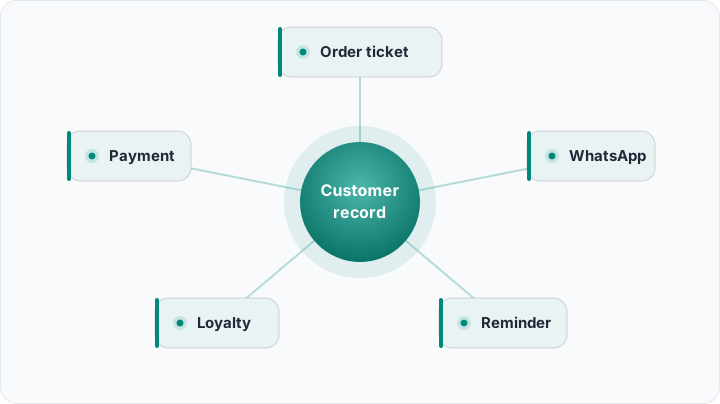
Track the customer, not the tickets
Rocketly brings your digital ticket, pickup reminders and WhatsApp onto one screen to bring order to your dry cleaning shop.
Try it freeComplaints, lost tickets and the hard moments
Every dry cleaner has a bad day now and then: a stain that wouldn't lift, a button that came off, a piece that went missing. Those moments are unavoidable; what matters is how you handle them. When you have the record's history at hand -- when it came in, what note was written, what was done -- the conversation stops being an argument and turns into a search for a fix.
The lost-ticket saga shrinks with a digital record too. The customer gives a name or a phone number and you find the order. The tension of "no ticket, no garment" gives way to the ease of "let me pull you up right now."
What to track, and when you can skip it
Don't let the word "reports" scare you. A small shop needs only a few plain numbers. Even these three, checked once a week, steer most of your decisions.
- Ready but not collected: how many bags are waiting on the shelf? If that number is growing, your reminders are slipping.
- Repeat customers: how many people came back a second time this month? That's the pulse of loyalty.
- Busy days and hours: when does the work pile up? You staff and set pickup promises around it.
The same discipline helps in any business that puts the relationship on record -- much like a pharmacy running refill reminders and chronic-patient follow-up.
Let's be honest: not every shop needs a CRM. A tiny place handling a few pieces a day, where the owner knows every customer by name, can be perfectly happy with a paper stub. Setting up a system and getting used to it is work too, and it only pays off past a certain volume. The test is simple: if "is it ready?" calls, lost tickets and a growing pile of uncollected bags are eating your week, it's time to bring order. If the shelf empties itself by evening, there's no rush.
Frequently asked questions
Do I have to give up paper tickets entirely?
No. Many shops still hand the customer a printed slip while keeping a digital record in the background. The two coexist fine; what matters is that the single source of truth lives in the system.
For reminders, is WhatsApp or SMS better?
It depends on your customer. WhatsApp is more personal and free, but not everyone uses it; SMS reaches everyone. The best approach is to offer both and record the customer's preference.
How much hassle is setup for a small shop?
The core flow -- customer, order, status, reminder -- comes together in a few days. The real challenge isn't the tool; it's the team building the habit of recording every order.
Is a loyalty program mandatory?
Not mandatory, but in a repeat business it's the easiest win. Even a simple counter or a small seasonal gesture is enough to hold on to a regular.
Dry cleaning is, at its core, a business built on trust and repetition. The customer leaves something in your care, you return it on time and in good shape, and they come back. You can run that cycle on paper stubs, but as volume grows, keeping records in one place makes the work lighter. A tool like Rocketly earns its place right here: holding the digital ticket, the pickup reminder and customer messages on one screen, taking a little of the counter-side chaos off your shoulders. A bit of order often helps more than a new machine.