CRM for pharmacies: chronic-patient follow-up, refill reminders, loyalty
How a light pharmacy CRM makes your quiet regulars visible, with chronic-patient follow-up, consented refill reminders and OTC loyalty.
The most valuable customer in a neighborhood pharmacy is usually the quietest one: the retiree who picks up the same blood-pressure tablets every month, the parent refilling a child's prescription, the person managing diabetes who comes by every few weeks. They don't haggle, they don't complain; they simply arrive and leave. And one day, without anyone noticing, they stop coming. A pharmacy CRM earns its keep precisely here, by making that quiet regularity visible.
This article looks at how a pharmacy can strengthen chronic-patient follow-up, refill reminders and over-the-counter (OTC) loyalty, inside a careful, compliant frame. The goal is not to turn the pharmacy into a call center, but to make the trust that already exists more reliable.
The pharmacy's real customer is quiet but regular
Most retail businesses chase new faces. A pharmacy is different. Foot traffic matters, but the backbone of revenue is the people who return again and again — the ones whose names you know. Patients on chronic medication sit at the heart of that group: blood pressure, thyroid, cholesterol, diabetes. Their need follows a predictable calendar.
The trouble is that this loyalty is fragile, and it breaks quietly. A patient drifts to the pharmacy next to a newly opened clinic, moves house, or simply forgets to refill this month. Nobody files a complaint. Months later someone says, "we haven't seen Mrs. Kaya in a while," and the habit is already gone.
What makes a pharmacy strong is remembering that quiet cycle — knowing roughly who is due and when, and nudging gently when a medication is about to run out. None of this needs complicated software, only scattered knowledge kept in one place. In that sense the work resembles how veterinary clinics keep patient records and send vaccine reminders: a care relationship with a rhythm.
What a CRM means here (and what it doesn't)
The word "CRM" sounds corporate and oversized. For a pharmacy the meaning is plainer: moving customer relationships off scraps of paper, out of the phone's contacts and the pharmacist's memory, into one orderly place.
To be honest, not every pharmacy needs a heavy system. A small shop that sees thirty prescriptions a day, where the owner knows everyone, can run happily on a notebook for years. A CRM earns its value when regulars outgrow memory and more than one person works behind the counter.
A CRM is not a machine for bombarding people with campaigns. The point is not endless messages but one useful reminder at the right moment — the difference between reassurance and nuisance.
Chronic-patient follow-up: not missing the cycle
Chronic medication is, by its nature, a need with a rhythm: a thirty-day box runs out in roughly thirty days, and knowing that rhythm is the most practical piece of information a pharmacy holds.
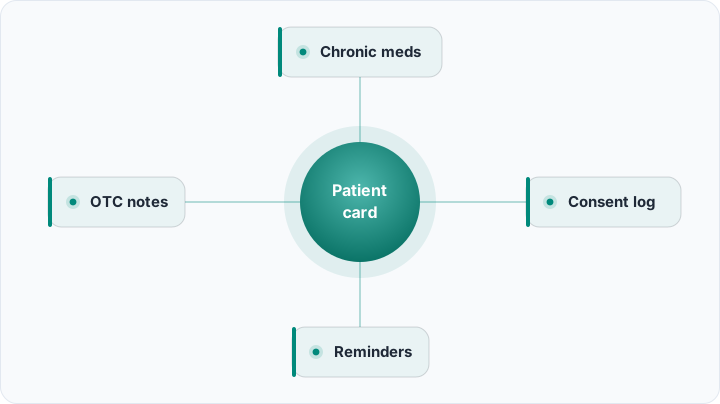
In a good setup, each regular patient has a simple card: which medication, at what interval, and when they last collected it. A few days before the box is due to run out, the card reminds you — so you are ready before the patient even calls, ordering stock if it is low and thinking ahead if an alternative is needed.

There is a quieter benefit too: continuity. If a regular patient hasn't been in for three months, that gap can be a signal — a health problem, or a treatment quietly abandoned. Noticing it puts the person before the sale; it never replaces medical advice, but a timely "how have you been" still counts for something.
Refill reminders, with consent
Reminders are the most useful and most delicate part of all this. Useful, because nobody wants to discover their medication has run out, and people are grateful to be told early. Delicate, because health is intensely private, and an unwanted message can undo trust in an instant.
So the rule is simple: reminders always happen with consent. The patient explicitly says, "yes, message me on WhatsApp when my medication is nearly finished," and can say "stop" at any time. Wording matters too: rather than naming a specific medication on a screen anyone might glance at, keep the language neutral and discreet.
- Let the patient pick the channel: Some find WhatsApp comfortable, others prefer SMS, and leaving the choice to them lifts participation.
- Keep the timing gentle: One reminder a few days before the medication runs out works far better than a stream of messages.
- Make opting out easy: Being able to leave the list with one word is a matter of both compliance and basic courtesy.
Any business with a built-in rhythm uses the same logic; the way driving schools organize lesson and exam reminders rests on exactly the same idea.
OTC and loyalty: a relationship built on advice
With prescription medicine, the pharmacist's room to maneuver is narrow; price and product are largely fixed. The real relationship, and real loyalty, is built on the OTC side: vitamins, skincare, baby products, seasonal supplements.
Here, loyalty is less a points app than a remembered piece of advice. The pharmacist who suggested vitamin D last winter, or matched a skincare product to a skin type, stays in the customer's mind. A CRM supports that memory: when the customer returns, you see what you last discussed and what they tried.
A pharmacy's real loyalty program isn't points. It's a piece of advice, remembered correctly.
A light loyalty record helps too: a small, consented seasonal note to regular OTC buyers. The same logic sits behind the loyalty relationship restaurants build over WhatsApp — only, in a pharmacy, the tone stays more measured.
Remember your quiet regular
Rocketly gathers WhatsApp, Instagram and SMS in one inbox and keeps consented reminders manageable even for a small pharmacy.
Explore RocketlyData, privacy and the rules
Health data is the most sensitive category of personal information, and taking that seriously comes before any marketing idea. A few principles carry you most of the way: keep only what you genuinely need rather than hoarding "just in case"; send no reminder without explicit consent; limit who can see what, since not everyone behind the counter needs access to everything; and when a customer says "delete my data," be able to do it easily.
This article is a practical frame, not legal advice; for your obligations, look to your local regulations and professional body's guidance. The general rule is plain: technology exists to strengthen trust, not to exploit it.
A practical setup for a small pharmacy
For a small pharmacy, the right start is a small one. Picture a two-person shop: an owner and one technician. Loading hundreds of records on day one is exhausting and unnecessary.
Instead, begin with the most valuable cycle. Enter your most regular chronic patients — say forty of them — with just a name, a preferred channel, the main medication and consent status. Within a few weeks the rhythm settles and proves itself; then you add OTC advice and loyalty notes.
- Start with one inbox: Bringing WhatsApp, SMS and other channels onto one screen stops messages from getting lost or answered twice.
- Keep templates ready: A few gentle, ready-made reminder texts keep the tone consistent on busy days.
- Measure, but don't obsess: Seeing how many reminders became refills each month is enough; you needn't track every click.
The same idea drives how e-commerce turns the post-purchase relationship into revenue: the real value isn't in the first sale, it's hidden in the second and third visit.
So does every pharmacy need one?
The honest answer is no. For a very small, single-person pharmacy whose owner knows every customer by name, a separate system can create more work than it removes. A paper ledger and a good memory go a long way.
A CRM starts to make sense when regulars grow too numerous to hold in your head, when more than one person serves the same customer, or when orderly, consented reminders stop being possible by hand. At that point the system isn't a cost; it's insurance against the price of the regular you lose without noticing.
Frequently asked questions
Is it compliant to keep customer information in a pharmacy?
Keeping personal and health data is possible as long as you obtain explicit consent, keep it to a minimum and store it securely. For your exact obligations, rely on your local regulations and professional body's guidance; this article is a practical frame, not legal advice.
Can I send reminders without asking permission first?
No. Reminders should go out only when the patient has clearly agreed, and every message should carry an easy way to opt out. An unrequested message damages both trust and compliance.
Isn't this too complex for a small pharmacy?
It doesn't have to be. Starting with a few dozen of your most regular chronic patients and a single inbox is enough; you grow the system as it proves its worth. For very small pharmacies, a good notebook still does the job.
Which channel is best for reminders?
The best channel is the one the patient chooses. Some are comfortable with WhatsApp, others prefer SMS; leaving the choice to them both lifts participation and respects their privacy.
A neighborhood pharmacy's greatest asset lives not in its technology but in its trust. A good system doesn't create that trust; it just makes forgetting harder, the regular customer visible, and a gentle, well-timed reminder possible. When tools like Rocketly bring WhatsApp, Instagram and SMS into one inbox and keep consented reminders manageable for small teams, the essence of the work stays the same: remembering the quiet regular. Technology only makes it possible at scale.