CRM for restaurants: full tables with reservations, loyalty and WhatsApp
What a CRM for restaurants is and how to use it: reservation and no-show management, guest profiles, loyalty and repeat visits, campaigns, review management, a natural match with WhatsApp and choosing a CRM for a small restaurant.
Restaurants are built on repeat guests and full tables — but most restaurants manage guest relationships in their heads or scattered notebooks. A guest's birthday, favourite table or allergy isn't remembered; a one-time diner is never invited back. A CRM for restaurants turns this scatter into order: it lets you know your guests, fill tables and turn one-time customers into regulars.
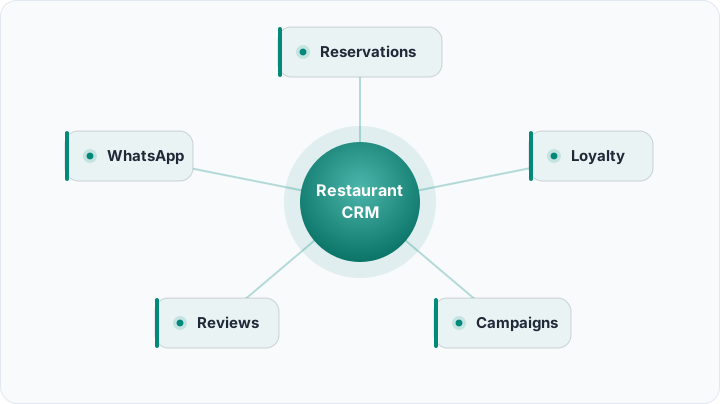
In this guide we cover what a CRM for restaurants is, which challenges it solves, its main uses (reservations, guest profiles, loyalty, campaigns, review management), its natural match with WhatsApp and how to choose one for a small restaurant. Because in the restaurant business, the real profit isn't in one-time visits but in the guest who comes back.
What is a CRM for restaurants and why is it needed?
A restaurant CRM is a system that gathers and manages a restaurant's relationship with its guests — from reservations to preferences, from visit history to feedback — in one place. It's a general CRM adapted to the specific needs of the restaurant business. Why is it needed? Because a restaurant's success depends less on finding new customers than on retaining existing guests; and retaining requires knowing that guest. We covered the basic logic of a CRM in what is a CRM. In short, a restaurant CRM turns a guest from a stranger into a familiar visitor.
The challenges restaurants face
Restaurants wrestle with their own particular challenges. No-show reservations lead to empty tables and lost revenue. One-time customers may never return because there's no way to stay in touch with them. Online reviews — positive or negative — determine reputation but often go unmonitored. And marketing is usually untargeted and unmeasurable. The common root of all these problems is the same: scattered guest data. A CRM offers a solution to each challenge by gathering this data.
1. Reservation and no-show management
An empty table is lost revenue. A CRM gathers reservations in one place and, most importantly, lowers the no-show rate with automatic reminders: a WhatsApp or SMS reminder goes to the guest before their visit, asking them to confirm. This simple step noticeably reduces the number of no-show reservations. We covered how automatic reminders are set up in appointment reminder automation. Full tables are a restaurant's lifeblood; a CRM helps keep them full.
2. Guest profiles and personalisation
What makes a guest feel special is being remembered. A CRM keeps a profile of each guest: their favourite table, favourite dishes, allergies, special occasions and visit history. A server sees this information before the guest arrives and can say "your usual table is ready." This personalisation turns an ordinary dinner into a memorable experience. What big chains have done for years, a small restaurant can do too with a CRM. A guest comes back when they're a recognised visitor, not a number.
3. Loyalty and repeat visits
In the restaurant business the real profit is in the repeat guest — finding a new customer is far more expensive than bringing back an existing one. A CRM lets you run loyalty programs (points, rewards, special offers) and spot guests who haven't visited in a while and reach out to them. We covered how to set up a loyalty program in customer loyalty program and the general principles of retention in customer retention. Turning a one-time guest into a regular visitor is a restaurant's most valuable investment.
4. Campaigns and marketing
A CRM turns your restaurant's marketing from untargeted guesses into measurable campaigns. Using your guest data, you can send segmented campaigns: a "we miss you" offer to those who haven't visited in a while, a special discount to those with a birthday, a campaign for quiet weekday hours. You can send these messages via WhatsApp or email; we covered both in WhatsApp marketing and email marketing automation. A targeted campaign fills far more tables than a generic ad sent to everyone.
5. Review and feedback management
A restaurant's reputation lives in online reviews. A CRM lets you collect feedback from guests after a visit and solve a bad experience before it becomes a bad review. Encouraging a satisfied guest to leave an online review strengthens your reputation; quietly reaching an unhappy one prevents a crisis. We covered collecting feedback systematically in how to collect customer feedback. Listening to reviews and acting on them makes a restaurant continuously better.
WhatsApp and restaurants: a natural match
WhatsApp is an especially powerful channel for restaurants because guests are already there. You can send reservation confirmations and reminders via WhatsApp, share your menu as a WhatsApp catalog and take orders straight from the chat. A guest can book a table with a single message, without making a phone call or downloading an app. We covered the WhatsApp catalog in creating a WhatsApp catalog and the marketing side in WhatsApp marketing. WhatsApp connected to a CRM becomes both the restaurant's reservation desk and its marketing channel.
Combining with online ordering and delivery
Today many restaurants work not just with table service but with takeout, online ordering and delivery platforms. The problem is that these orders usually stay scattered in different places — a platform, a phone, a WhatsApp message. A CRM gathers orders and customers from all these channels in one place; so you see a customer's history both at the table and online, and offer them a holistic experience. Knowing and reaching a customer who orders online is also the way to turn them into a loyal guest. Scattered orders mean lost data; centralised orders mean a relationship.
Drawing insight from restaurant data
A CRM doesn't just collect data; it turns that data into meaningful decisions. Which days and hours are busiest, which dishes are ordered most, which guests come most often, which campaign filled the most tables? The answers to these questions let you run a restaurant on data rather than guesses. For example, a campaign tailored to a quiet day to liven it up, or a menu arrangement that highlights the most popular dish. Small data-driven decisions make a big difference over time. A restaurant's instinct is valuable, but it's far stronger when backed by data.
How to choose a CRM for a small restaurant
The right CRM for a small restaurant isn't complex and expensive but simple and useful. The features to look for: easy reservation management, guest profiles, WhatsApp integration, simple campaign tools and an affordable price. An interface staff can learn quickly and that doesn't slow down daily work is essential — because a CRM that isn't used is no better than no CRM. For most small restaurants, starting with a free plan and expanding as the need grows makes the most sense. The right tool makes the restaurant's work easier, not a burden.
Common mistakes
Avoid these mistakes: collecting guest data but not using it; focusing only on new customers and neglecting existing guests; not sending reminders to prevent no-shows; ignoring negative reviews; and choosing a system too complex for staff to use. Another mistake is sending campaigns to everyone the same way — when a segmented, personal message is far more effective. A good restaurant CRM is simple, useful and guest-focused.
Example: a restaurant's use of a CRM
Picture a small family restaurant. Every reservation is recorded in the CRM and a WhatsApp reminder goes to the guest before their visit — no-shows drop. When a regular guest arrives, the server sees their favourite table and wine. When a guest hasn't visited in two months, the system flags it and a special "we miss you" offer is sent to them. Satisfied guests are invited with a post-visit message to leave a review. The menu is shared as a WhatsApp catalog. A year later the restaurant has fuller tables and a more loyal customer base — because it knows and remembers every guest.
Run your restaurant from one place
Reservations, guests, loyalty and WhatsApp — if they're all in scattered notebooks and people's heads, opportunities slip away. Rocketly gathers your guest relationships in one place; recognises repeat diners, fills tables and turns one-time customers into regulars. Try it on the free plan, no credit card required.
Start FreeSummary
A CRM for restaurants lets you manage reservations, loyalty, campaigns and reviews by gathering your guest relationships in one place. In the restaurant business the real profit is in the repeat guest; and a CRM makes it possible to know, remember and bring back that guest. Reduce no-shows with reminders, personalise with guest profiles, bring guests back with loyalty programs and communicate directly with WhatsApp. For a small restaurant, choose a simple, useful, guest-focused tool. Because a restaurant's most valuable asset isn't the guest who comes once and leaves, but the one who comes back.