What is multichannel communication? Unify every channel in one inbox
What multichannel communication is, why a unified inbox is powerful, and how it differs from omnichannel. Channels, context, pros and mistakes.
Today customers reach you from everywhere: a question on WhatsApp, a request from a web form, a quote ask over email, a DM on Instagram. The problem isn't having many channels; it's that those channels are disconnected. When messages land in different places, replies are delayed, one gets forgotten, and the customer is left frustrated, saying "but I already told you this." Multichannel communication removes that fragmentation by bringing all these channels into one place.
This article explains what multichannel communication is, why a unified inbox is so powerful, and the difference between multichannel and omnichannel. For related topics, our lead tracking and sales automation guides are complementary; for the whole picture, see what is a CRM.
What is multichannel communication?
Multichannel communication is the approach of gathering a business's communication with customers across different channels (WhatsApp, email, web form, phone, social media) into a single hub. The goal is that, whatever channel a message comes from, it's met in the same inbox with the same context.
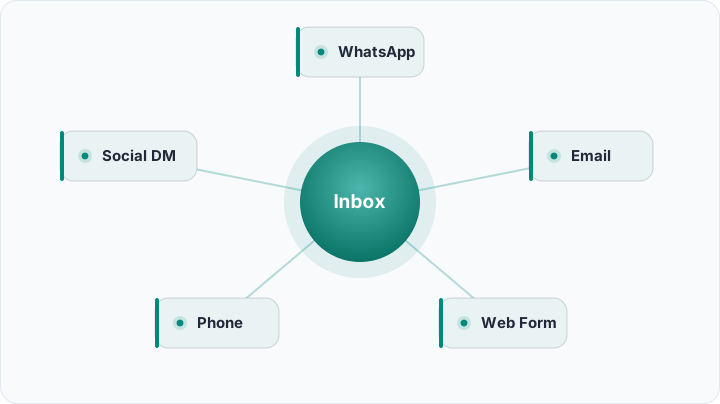
The power of a unified inbox
Gathering messages in one place looks simple but its effect is large. A rep sees every conversation without jumping between tabs; a WhatsApp message and an email request from the same customer sit side by side. Response times shrink, no message slips through the cracks, and the team looks at the same information from the same place.
Which channels get unified?
- WhatsApp: the most used channel in many markets; connected via the official business integration.
- Email: the backbone of corporate correspondence; flows straight into the inbox.
- Web form and live chat: requests from the site are logged instantly.
- Phone: call notes and records are added to the customer's history.
- Social media DM: messages from Instagram and similar channels are gathered in the same inbox.
Multichannel vs omnichannel
The two terms are often confused. In a multichannel approach there are several channels, but each can operate on its own island. Omnichannel goes one step further: context flows seamlessly across channels — when a customer starts on WhatsApp and continues by email, the conversation picks up where it left off; nobody asks for the same information twice. The real goal is the omnichannel experience, and a unified inbox is its foundation.
Context: customer history carries across channels
The real value of multichannel communication is that every message is tied to a history. When a customer calls, the rep sees at a glance which form they filled, which email they replied to and which quote they viewed. This context makes every conversation personal and efficient; the customer feels recognized.
Pros and what to watch for
Pros
- Faster responses: all messages in one place, no pending request overlooked.
- Consistency: whatever channel they come from, the customer is met with the same context.
- Team efficiency: reps don't lose time switching between tabs and apps.
What to watch for
- Channel management: each channel has its own tone and pace expectation; one inbox shouldn't erase that.
- Overload: many channels can turn into chaos without clear assignment rules — who handles which message must be obvious.
For the team: assignment and handoff
For a unified inbox to work across a team you need clear rules: an incoming message should be assigned to the right person, handed off when a rep is busy, and it should be visible who owns which conversation. Automatic assignment rules do this routing in seconds and fairly, so the "who's handling this message?" uncertainty disappears.
Metrics to track in multichannel communication
To see the value of a unified inbox, tracking a few metrics is enough: first response time (how long, on average, until a message gets a reply?), resolution time (how long until a request is closed?), per-channel volume (where do most messages come from?) and customer satisfaction. These indicators clearly show which channel brings the load and where you need to get faster.
Practices that shorten response times
Speed is the heart of multichannel communication. A few simple practices make a big difference: canned reply templates for frequently asked questions, response targets (SLAs) that ensure a reply within a set time, and automatic routing that sends messages to the right person instantly. These practices speed up replies without lowering quality.
Common mistakes
- Opening channels without unifying them in one inbox — messages still scatter.
- Having no clear assignment rule; two people answering the same message, or no one.
- Not logging channel history; the customer has to explain themselves from scratch every time.
A short example
A customer asks about pricing on WhatsApp, then requests a demo through the web form. In a disconnected system these are two separate requests and probably get answered by two different people. In a unified inbox, both merge into the same customer record; the rep sees the context and gives a single, consistent reply. The customer feels recognized, the process speeds up, and no request is lost.
Frequently asked questions
Are multichannel and omnichannel the same thing?
Not exactly. Multichannel means having several channels; omnichannel is the experience where context flows seamlessly across those channels and the customer can continue where they left off. Omnichannel is the mature form of multichannel.
Is it hard to gather all channels in one place?
No. Modern CRMs connect WhatsApp, email, web form and social media into one inbox via integrations. The technical setup is usually a few steps; after that everything flows from one screen.
Can WhatsApp be used for business?
Yes. With the official business integration (WhatsApp Business), incoming messages land in the CRM inbox, attach to the customer record and are managed professionally by the team.
Which channel should I start with?
The channel your customers use most. For many businesses that's WhatsApp or email. Connect your busiest channel to the unified inbox first, then add the others.
Is customer history visible across channels?
In a good CRM, yes. All of a customer's correspondence — regardless of channel — merges into one record, so every rep sees the history and the customer never has to repeat themselves.
Multichannel communication is a layer of cohesion that keeps you from making customers wait or losing messages. Rocketly unifies WhatsApp, email, web form and social media into one inbox, ties every message to the customer's history, and assigns it to the right rep automatically.