What is digital transformation? A practical guide for SMBs
What is digital transformation (more than technology)? The three dimensions (process/data/culture), the roadmap, prioritization, adoption, and the concrete first step with a CRM.
"Digital transformation" may sound like something specific to big companies, complex and expensive — but it's actually an extremely concrete and accessible concept for every business, especially SMBs. At its core, digital transformation is making the way you run your business more efficient, smarter, and more competitive with digital tools and data. In this piece we cover what digital transformation is (and isn't), where an SMB should start, and the pitfalls in the process.
The goal is to take digital transformation out of being "a cool technology project" and grasp it as a practical journey that genuinely improves your business, advancing step by step.
What is digital transformation? (More than technology)
Digital transformation is a business reorganizing its processes, decision-making, and customer interaction with digital tools and data. A common fallacy is thinking of it as "buying new software" — yet digital transformation is far more than just technology. Technology is a tool; the real transformation happens in how you run your business with those tools. Digitizing a paper process, making data-based decisions, and the team adopting these new methods — this is the real essence of transformation. So digital transformation isn't a software purchase but a change in the way of working. Tools like a CRM are concrete steps of this transformation, but the transformation itself is broader.
Why digital transformation? (Especially for SMBs)
Digital transformation is no longer a luxury for big companies but a necessity for SMBs to survive in competition. The reason is simple: digital tools and data give a small business the power to compete with much bigger rivals. A business working with manual, paper-based, or scattered processes stays both slow and inefficient against a digitized competitor. Digital transformation saves time, reduces errors, enables better decisions, and improves customer experience. And the good news is: digital transformation requires not huge budgets but correct prioritization and step-by-step advancement. A small business can transform by starting from the area that will add the most value.
The three dimensions of digital transformation
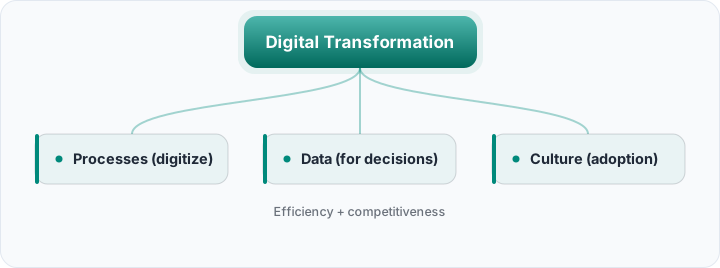
Digital transformation happens in three dimensions. Processes: digitizing and automating manual and scattered work — a system instead of paper, automation instead of repetitive tasks. Data: making decisions based on real data instead of intuition — seeing how your business is really doing with numbers. Culture: the team adopting these new tools and methods — because even the best tool is useless if it isn't used. Together these three form real transformation. Just buying a tool (without process and culture) fails; the real value is in all three changing together. Many digital transformations fail because they neglect the culture dimension.
Digitizing processes
The most concrete dimension of digital transformation is digitizing processes. Many SMBs still work with paper, scattered files, WhatsApp messages, and information kept in mind — and this is both slow and error-prone. Digitizing processes is moving this disorder into an orderly, searchable, and automatic system: customer information in a CRM, invoices in digital systems (like e-invoicing), repetitive tasks in automation. This both saves time and prevents information from being lost. Process digitization is the most visible and fastest-return step of transformation — because it immediately reduces the burden of manual work.
Making data-based decisions
The most powerful but most overlooked dimension of digital transformation is making data-based decisions. The real value of digitization is not just speeding up work but making smarter decisions with accumulated data. Which product sells more, which customer segment is more profitable, which marketing channel works? In manual systems these questions stay unanswered; in a digital system, data feeds your decisions. Customer and sales data accumulated in a CRM lets you make decisions based on evidence, not intuition. Even advanced tools like AI are built only on this data foundation. Data is the dimension that reveals digital transformation's real power.
The digital transformation roadmap

Digital transformation is not doing everything at once but following a systematic roadmap. First you assess (which areas of your business most need improvement?). Then you prioritize (start from the area that will add the most value). Then you choose tools (a solution suited to that need). Then you implement (including the team). And you measure and improve. This roadmap takes digital transformation out of being a daunting giant project and breaks it into manageable steps. Each step lays the foundation of the next — and a small gain increases confidence and momentum toward transformation. Starting small and growing is the healthiest path.
Where to start? Prioritization
The most critical decision in digital transformation is where you'll start. Trying to transform everything at once strains both budget and team and usually ends in failure. The right approach is starting from the area where you feel the most "pain" or that will add the most value. Find your business's most scattered, most time-wasting, or most error-producing process and transform it first. For most SMBs, this is customer and sales management — because scattered customer information directly leads to revenue loss. A digital maturity assessment clarifies where your business stands and where you need to focus. Prioritization is the key to success for an SMB with limited resources.
Culture and adoption: the hardest part
The most neglected dimension of digital transformation, and the one that most leads to failure, is culture and adoption. You can buy the best tool, but if your team doesn't use it, it creates no value. People are usually attached to their habits and resist change — this is natural. A successful transformation includes the team in the process, clearly shows the benefit, provides training, and makes using the new tools easy. A tool imposed from the top but not adopted stays on the shelf. So digital transformation is as much a human project as a technology project. The team feeling "this makes my work easier" is far more decisive than the success of any tool. Transformation that neglects culture stays on paper.
CRM: the concrete first step of digital transformation
For many SMBs, the most logical and most concrete starting point of digital transformation is a CRM. Why? Because a CRM combines all three dimensions of transformation in one point: it digitizes scattered customer and sales processes, accumulates valuable data for decision-making, and establishes a culture ground for the team to work in a shared system. Moreover, customers and sales are the direct source of most businesses' revenue — so transformation here provides the fastest and most concrete return. With a modern cloud-based CRM, you can take the first step of digital transformation in minutes, without complex infrastructure or a large investment. A CRM isn't the whole transformation but its most solid start.
Start your digital transformation with a CRM
Rocketly gathers your customers, sales, and processes in one digital hub, so you take the most concrete first step of digital transformation.
Start FreeCommon mistakes
- Thinking transformation is only technology: Buying a tool isn't enough; process and culture must change too.
- Doing everything at once: Transforming the whole business at once strains budget and team; prioritize.
- Neglecting culture: If the team doesn't adopt it, even the best tool stays on the shelf.
- Not using data: Digitizing and not using data for decisions leaves the potential half-realized.
- Not measuring the return: Advancing without measuring whether transformation works is risky.
- Saying "not for us": Digital transformation suits businesses of every scale, not just giant companies.
Getting-started checklist
- 1. Assess the current situation. Which process most needs improvement?
- 2. Prioritize. Start from the single area that will add the most value.
- 3. Choose the right tool. A solution suited to that need, easy to use.
- 4. Include the team. Adoption matters more than the tool itself.
- 5. Turn data into decisions. Don't just digitize, use the data.
- 6. Measure and grow. After a small gain, move to the next area.
Frequently asked questions
Isn't digital transformation very expensive?
A common fallacy is that digital transformation requires huge budgets — yet this isn't true. Most modern digital tools, especially cloud-based ones, are offered with low and predictable subscription costs; they don't require a large upfront investment. Moreover, digital transformation isn't buying everything at once but advancing step by step — which spreads the cost over time. In fact, it's often not the cost of digital transformation but the cost of not transforming (inefficiency, errors, lost opportunity, falling behind in competition) that is higher. With correct prioritization, a small business can start a meaningful digital transformation even with a limited budget.
Does a small business need digital transformation?
Definitely — in fact, digital transformation can be even more critical for a small business. Big companies already have a scale advantage; one of the ways a small business competes with them is being efficient and agile with digital tools. A small business working with scattered, manual processes is at a disadvantage against a digitized competitor. Digital transformation gives a small business the power to be "small but smart": doing a lot of work with few resources. So digital transformation isn't a luxury for big companies but a competition tool for small businesses. Whatever the scale, efficiency and data add value to everyone.
Where should I start with digital transformation?
The most solid start is identifying the area where your business feels the most "pain" or that will add the most value — not everything at once. Find your business's most scattered, most time-wasting process and transform it first. For most SMBs, this is customer and sales management (a CRM), because scattered customer information directly loses revenue. First assess your current situation, determine a single priority, choose a tool suited to it, and start with a small gain. This first success creates both confidence and momentum. Starting with a small but clear step is far more effective than being paralyzed by a giant plan.
How long does digital transformation take?
Digital transformation is not a destination but an ongoing journey — so there's no definite answer to the "how long does it take" question. The first concrete steps (e.g., switching to a CRM) can be taken within minutes or days; but a full transformation continues with your business's constant development. What matters is seeing transformation not as a one-time project but as a culture of continuous improvement. As technology and business needs change, transformation also evolves. The good news is: each step adds value immediately — you don't need to wait for full transformation. Small and continuous improvements fundamentally transform your business over time. Starting the journey matters more than waiting for the perfect plan.
Digital transformation isn't a complex project specific to giant companies but a practical way for businesses of every scale — especially SMBs — to make their business more efficient, smart, and competitive. Its essence isn't just technology; it's digitizing processes, making data-based decisions, and the team adopting this. Its secret lies in starting from the area that will add the most value and advancing step by step instead of trying to do everything at once, not neglecting culture, and measuring the return. For most SMBs, the most concrete first step is a CRM — because it combines the three dimensions of transformation (process, data, culture) in one point and provides the fastest return in customer/sales, the source of revenue. Digital transformation is not an arrival but a journey — and each step adds value immediately.