Sales rep onboarding and ramp: making a new rep productive quickly
What is ramp and how do you shorten it? Structured onboarding, process training along with the product, CRM from day one, shadowing, early wins, and measuring ramp.
Hiring a salesperson is expensive — but the real cost is the time until they become productive. This is called "ramp": the time a new rep needs to reach full productivity. A rep who takes six months to close their first sale is actually a six-month cost. A good onboarding process shortens this ramp; a poor onboarding either lengthens it or leads to the rep leaving early. Shortening ramp is one of the highest-return productivity investments of a sales team.
In this guide we cover what ramp is, why it matters, the mistakes that lengthen it, a structured onboarding process, the role of the right tools (especially the CRM), shadowing, early wins, and measuring ramp. The goal is to replace the "sink or swim" approach with a systematic process that makes the new rep productive quickly and solidly.
What is ramp, and why does it matter?
Ramp is the time from the moment a sales rep starts to the moment they reach full productivity (for example, hitting their quota). During this time the rep draws a salary but doesn't yet fully contribute — that is, every extra ramp month is a cost. Shortening ramp creates value in two ways: the rep starts producing revenue earlier, and an earlier sense of success reduces early departure (early churn). So onboarding should be seen not as a formality but as a direct productivity and cost matter.
What lengthens ramp
The biggest factor that lengthens ramp is a lack of structure. Dropping the new rep into the field with "here's your desk, go sell" (sink or swim) wastes their time on trial and error. An unclear sales process leads to the rep not knowing what to do in each situation. Poor or untaught tools slow the rep down. And a lack of early feedback causes wrong habits to solidify. The common denominator of these mistakes is leaving the rep on their own and expecting them to find the way themselves — yet the way can be charted in advance.
Structured onboarding

A fast ramp goes through a structured onboarding. This journey has clear stages: after hiring, product and process training, then shadowing an experienced person, then practice with first (achievable) opportunities, and finally full productivity. Each stage having a clear purpose and duration lets both the rep know where they are and the manager see the progress. Structure turns chaos into predictability — and a predictable path is walked faster.
Product and process training
The first stage of onboarding is usually product training, but there's a common gap here: teaching only product features isn't enough; the rep also needs to learn the sales process. What are the stages of the sales funnel, which methodology is used, how is an opportunity advanced? Sales enablement is exactly the discipline of giving the rep both of these — product knowledge and process skill — together. A rep who knows the product but not the process resembles someone who has a good tool but doesn't know how to use it.
The right tools: teaching the CRM early
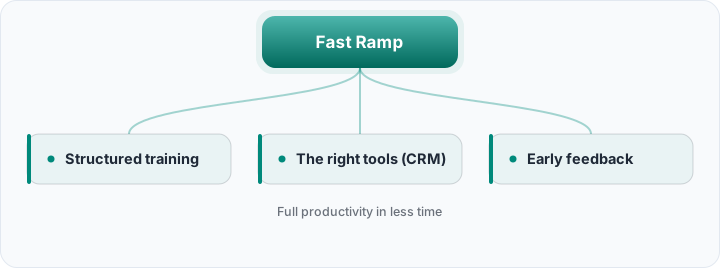
The place where the sales process lives is the CRM — so teaching the rep the CRM early and well is a critical part of ramp. When the new rep adopts the CRM as a natural part of their daily work, the process becomes visible and trackable for them. Imposing the CRM later, after habits have settled, meets resistance. The moment CRM adoption is easiest is day one: if the rep starts using the CRM from the very first day, it becomes not a burden but the center of how they do their work.
Shadowing and learning by example
No training replaces watching a real conversation. The new rep shadowing an experienced person — listening to real sales conversations, seeing how good questions are asked, how objections are handled — connects theory to practice. For example, reading about the SPIN technique or discovery questions in a book is one thing; seeing an experienced rep use them masterfully in a live conversation is another entirely. Shadowing turns abstract knowledge into concrete skill and markedly speeds up ramp.
Early, achievable wins
Throwing a new rep onto the toughest, biggest opportunities from day one both overwhelms them and creates an early sense of failure. Instead, designing early and achievable wins — small but real successes — builds confidence and creates momentum. The first closed sale, however small, lets the rep say "I can do this." These early successes both preserve motivation and reinforce learning — and a motivated, confident rep ramps faster.
Measuring and early feedback
Ramp can't be accelerated if it isn't managed. So defining ramp milestones (first conversation, first quote, first close, quota) and tracking where the rep is are necessary. More importantly, giving early and frequent feedback: a wrong habit is corrected before it solidifies, a right behavior is reinforced early. Coaching based on conversation data makes this early feedback concrete — targeted development based on real conversations, not guesswork. Feedback given late is trying to correct an entrenched habit; feedback given early shapes it correctly from the start.
Measuring ramp: what does "productive" mean?
To improve ramp, you first need to define it. What does a "productive" rep mean for you — their first sale, hitting a certain quota, managing a certain number of active opportunities? After clarifying this definition, you can measure how long reps take to reach this point (time-to-productivity). Tracking this metric shows whether your onboarding process works: if ramp time is shortening, your process is improving; if it's lengthening, there's a problem. A ramp that isn't measured can't be improved.
Onboarding with a CRM
The CRM is the most powerful tool for accelerating ramp because it gives the new rep three things at once: a ready playbook (process, stages, example conversations), a pipeline to work on, and visibility into past successful examples. It also shows the manager the rep's ramp progress — who's stuck where, who needs early coaching. This is the face of sales rep productivity and a healthy sales CRM that extends into onboarding. When you put the CRM at the center of onboarding, the new rep not only joins the process but learns that process correctly from the start.
Put the new rep into the process from day one
Rocketly gives the new sales rep a ready pipeline, example conversations, and a clear process; it also gives the manager visibility into ramp progress and the ability to coach early.
Start FreeCommon mistakes
- "Sink or swim": Dropping them into the field without structure lengthens ramp through trial and error.
- Teaching only the product: If process and methodology aren't taught, you get a rep who knows the product but can't sell.
- Imposing the CRM later: Adopting the CRM after habits settle meets resistance; day one is the easiest moment.
- Skipping shadowing: Without watching a real conversation, theory doesn't turn into practice.
- Giving the hardest opportunities early: An overwhelming start creates an early sense of failure and loss of morale.
- Late feedback: Not correcting before a habit entrenches becomes a much harder job later.
Getting-started checklist
- 1. Define "productive." Clearly set the ramp's goal (first sale, quota).
- 2. Chart a structured path. Training, shadowing, first opportunities, full-productivity stages.
- 3. Teach the process along with the product. Not just features, but the sales process and methodology.
- 4. Teach the CRM from day one. Let the process live in the CRM, let the rep adopt it from the start.
- 5. Design early wins. Build confidence with achievable first successes.
- 6. Give early and frequent feedback. Measure ramp, coach before a habit entrenches.
Frequently asked questions
How long does a good ramp take?
This varies greatly by the complexity and price of the sale — in simple, fast sales it can take weeks; in complex B2B sales, months. What matters isn't the absolute duration but defining a reasonable ramp for your business and shortening it over time. Measuring your own average ramp time is the first step to improvement.
Does a small team also need formal onboarding?
A formal, heavy program isn't essential, but structure is always valuable. Even in a small team, charting a clear path for the new rep (what they'll learn, whom they'll shadow, which first opportunities they'll take) gives far faster results than a "sink or swim" approach. Structure shortens ramp regardless of team size.
When should I teach the new rep the CRM?
As early as possible — ideally in the first days. Leaving the CRM for later leads to the rep developing CRM-free habits and a later transition with resistance. Presenting the CRM from day one as a natural part of the work is the easiest way to have it adopted as the center of the process, not a burden.
How do I measure ramp?
First define what "productive" means (for example, the first closed sale or a certain percentage of quota), then track how long reps take to reach this point. This time-to-productivity metric is the clearest indicator of your onboarding process's effectiveness; if it's shortening over time, you're on the right track.
Sales rep onboarding and ramp is one of a sales team's most overlooked but highest-return productivity areas — because every shortened ramp month means direct revenue and savings. Its secret lies in replacing "sink or swim" with a structure: structured training, process along with product, CRM from day one, shadowing, early wins, and early feedback. When you make this systematic, the new rep starts contributing in weeks instead of months — and a solid start also lays the foundation for long-term success.